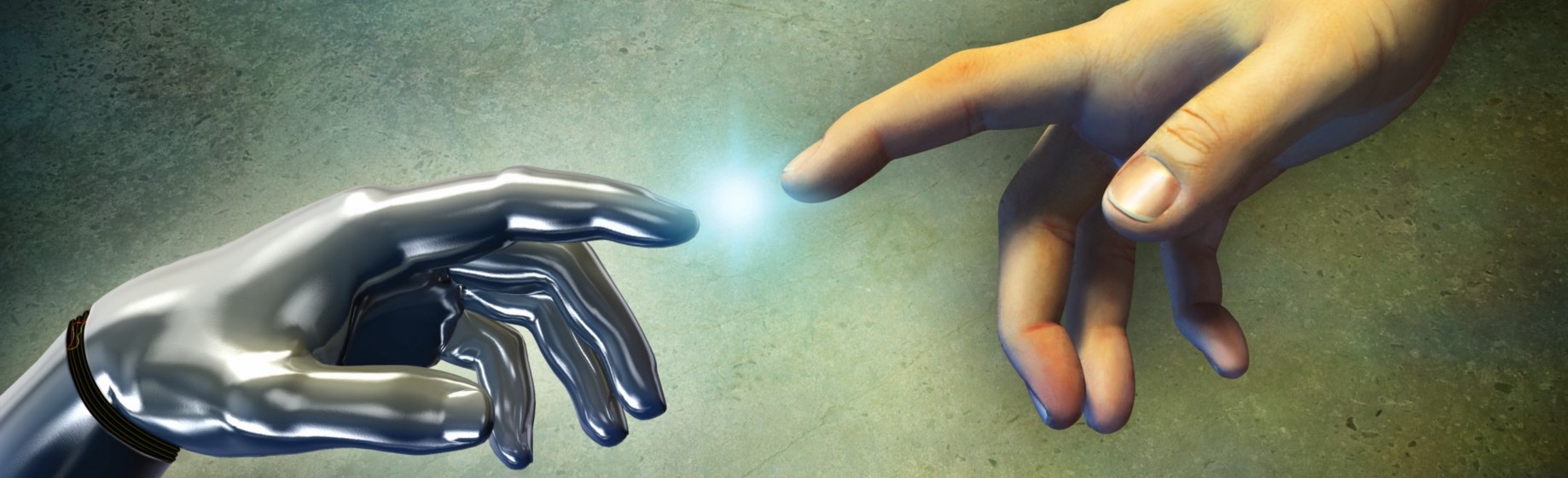
Social Robotics and Artificial Intelligence
README: Video #1 is included here just to give you an overview of some of the social robots that are available as consumer products. Socially assistive robots aim to provide specific supports to serve people with special needs. Examples include coaching for stroke rehabilitation (Video #2) and tutoring for children on the autism spectrum (Video #3).
README: For whatever reasons, humans like to create robots in our image. Humanoid robots have a special place in our endeavors. Sophia (Videos #4) and Ameca (Video #5) are good examples. Caption Data is a humanoid robot in the TV series Star Trek. In the episode ‘The Measure of a Man’ (Video #6), Captain Data’s personhood is challenged. Whether Caption Data is a crew member or a property of the fleet is debated in front of a legal council. The fussy boundary between human and robot is a favorite theme for science fictions and their movies. Some of the audiences may recall movies like ‘Bicentennial Man’, ‘A.I. Artificial Intelligence’, ‘Ex Machina’, and more recently ‘After Yang’, etc.
README: Humanoid social robots go virtual too. They appear on computer screens with human faces, bodies and intelligence. The performances of such social robots and artificial intelligence can be more impressive than the physical ones. Videos #7 and #8 are examples of virtual therapy and counseling services. The movie ‘Her’ (Video #9) shows how a man falls in love with a virtual assistant of a computer operation system – an A.I. linked with the internet of knowledge and resources.
README: Alan Turing, one of the great pioneers in computer science, suggests that a more practical issue in Human-AI interaction, as compared to more philosophical ontological issues, is when an artificial intelligence is taken as human by other biological humans. His famous ‘Turing Test’ provides an interesting approach to do just that (Video #10). It is important to note that artificial intelligence can be flawed with discriminatory biases too, just like humans (Video #11). Deep fakes using artificial intelligence are disrupting our social trust and harming our society (Video #12). Should social robots and artificial intelligence be regulated to save guard our social well-being? If so, how?
README: How would living with robots shape the future of being human? The last video below (Videos #13) is one by the Site Host. Intelligent robots, physical or virtual, are often portrayed as threatening competitors for human jobs. Maybe a more socially compatible strategy is to develop robots as human partners rather than as human replacements. What constitute good human-robot partnerships? While AI can learn to be become more human-like through interaction with humans, would humans become more robot-like through our interaction with robots? With the increasing presence of robots around us, would we reduce ourselves to robots and regard other humans as our tools as well?
You are welcome to contact the host to share your views on this page via the following whatsapp, telegram or email links.

